

Why Your Tomatoes Are Dropping Their Flowers — And What to Do About It
The dew was still evaporating when I heard it — a strange sound overhead. I looked up to see a flock of geese flying just above the rooftops in a tight wedge, heading north. No calling between them. Just the sound of wings beating the air, low and quiet, moving through the early morning like they had somewhere to be.
I bid them safe travels and bent back over my work — reclaiming a bed that had sunk three inches under a season of overgrowth. Shoveling the path back into the bed. Using what's already here before buying anything new.
And then the biggest earthworm I'd ever dug up came with a shovelful of soil. Fat, healthy, doing its quiet work in the dark. A sign it was going to be a good day.
That earthworm is what I want to talk about — not the worm itself, but what it represents. Healthy soil. Because we're heading into ten days of temperatures in the low 90s, and in a Sierra Foothills garden, heat like that is when the problems surface. The most common one I'm already hearing about: blossom drop.
What blossom drop is.
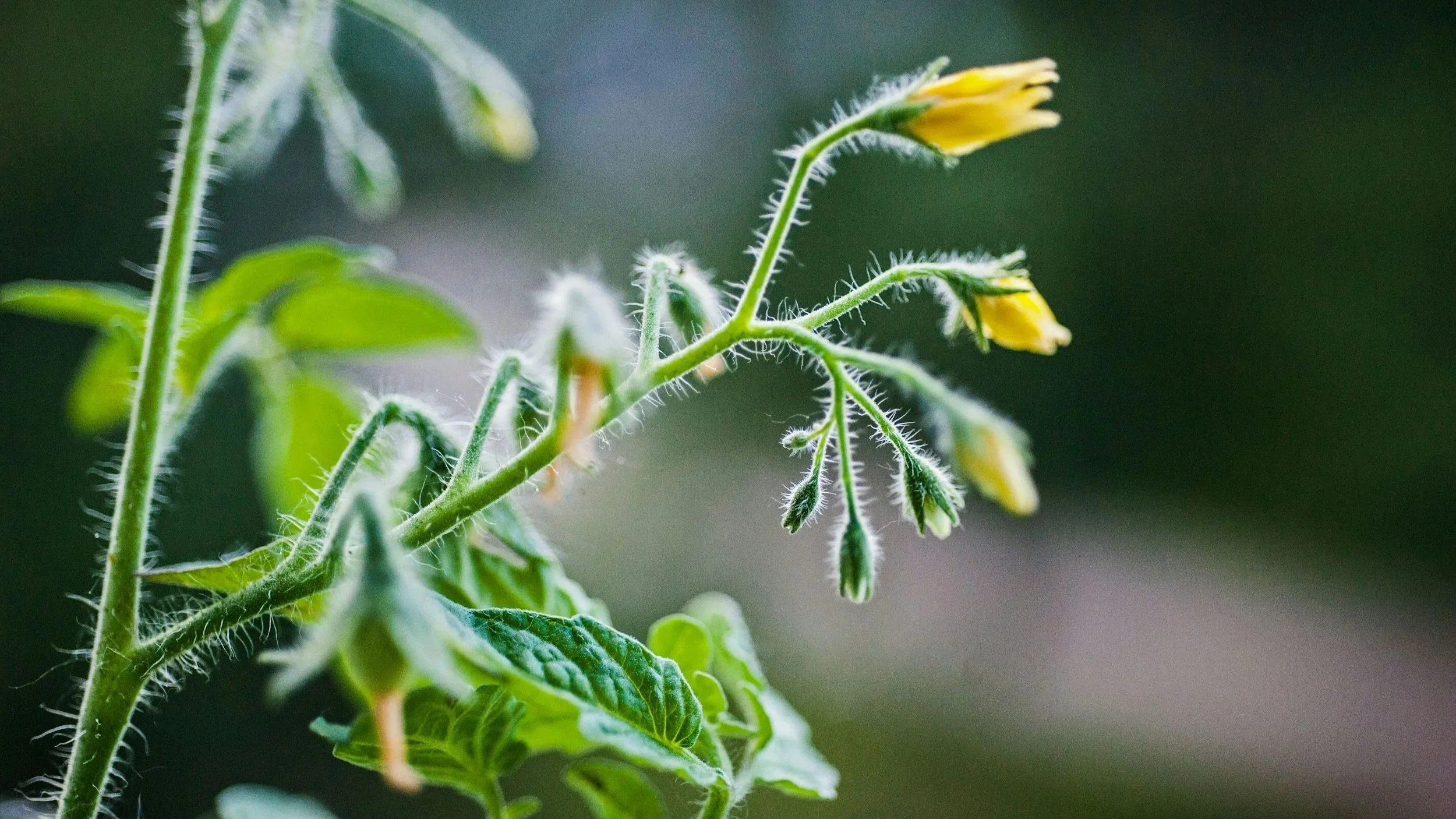
Blossom drop is exactly what it sounds like — your tomato plant produces flowers, and then drops them before they set fruit. You watch the flowers open, feel hopeful, and then find them on the soil a few days later with nothing to show for it. No small green tomato forming behind the flower. Just an empty stem.
It's one of the most discouraging things that happens in a summer garden. And it's one of the most misunderstood — because most gardeners assume they've done something wrong.
Usually they haven't.
Why it happens in our climate.
Tomatoes are particular about temperature at pollination time. They set fruit most reliably when daytime temperatures are between 70 and 85 degrees and nighttime temperatures stay above 55 and below 70. Outside those ranges — particularly when daytime heat pushes consistently above 90 — the pollen becomes non-viable. The flower opens, nothing happens, and the plant drops it.
In the Sierra Foothills, this is not a gardening failure. It is a climate reality. Our June and July heat spikes are exactly the kind of weather that causes blossom drop in even well-tended gardens. The plant isn't sick. It's responding rationally to conditions that make successful pollination unlikely.
What you can do.
The honest answer is that you cannot override the temperature. What you can do is minimize the other stresses that compound the problem.
Consistent deep watering is the most important intervention. A tomato plant under water stress in high heat is far more likely to drop blossoms than one that's consistently moist at root depth. Check the soil two inches down before you water — not the surface. Mulch deeply if you haven't already to keep root zone temperatures stable.
Shade cloth — a 30% shade cloth draped over your tomatoes during the hottest part of the afternoon — can reduce the temperature stress enough to improve fruit set during a heat event. It's not a permanent solution but it helps in a sustained heat wave.
Make sure your companion flowers that attract pollinators are in bloom and healthy. Even when conditions are marginal, active pollinator presence improves fruit set. Pinch your marigolds and basil to keep them blooming.
What you should not do.
Don't fertilize during a heat wave. High nitrogen fertilizer encourages leafy growth at the expense of fruit set and will make blossom drop worse, not better. Wait until temperatures moderate before feeding.
Don't panic. Blossom drop during a heat event is temporary. When nighttime temperatures drop back into the comfortable range — typically by mid-July in most Nevada County microclimates — your tomatoes will resume setting fruit. The plant is not lost. It's waiting.
The earthworm was right.
Healthy soil — the kind that fat earthworm was telling me about — is your best long-term defense against every summer stress a Sierra Foothills garden faces. It holds moisture longer, keeps root temperatures more stable, and supports the kind of plant health that helps tomatoes push through the hard weeks and come out the other side still producing.
Take care of the soil. The soil will take care of the garden.
If you want someone to show up in your garden and help you actually do this — that's Guided. Four weeks, your yard, your harvest. Book a free Garden Chat to see if it's a fit.
Want more Nevada County gardening advice specific to our Sierra Foothills climate? I send one email every Wednesday — seasonal, practical, and built for where we live. → Join the newsletter here
Ellie is a third-generation kitchen gardener, Certified Garden Coach, and Permaculture Design Consultant with 25 years of growing in Western Nevada County. She tends a one-acre homestead in Grass Valley with her two cats, chickens, and honeybees. She can also be found volunteering in her community as a Master Gardener of Nevada County.
Her work is rooted in a simple belief — that every woman who grows her own food carries that knowledge forward into her home, her community, and the next generation.
If you're ready to carry that knowledge forward in your own backyard, she'd love to help you get started.
