

Why What You Plant Next to Your Garden Matters as Much as What You Plant in It
I spent Mother's Day morning in an Adirondack chair with my coffee, my cat curled in my lap, and a view of the boysenberry beds I've been reclaiming from the weeds. It was a pleasing, damp coolness before the heat of the day. With the berries planted I turned to dreaming of what else would live there. Maybe marigolds. Or chives. Or both. Whatever the bees need.
That last thought — whatever the bees need — is actually the heart of companion planting. Not a chart. Not a rule. A way of thinking about your garden as a community of living things that are better together than they are alone.
Here's why that matters, and what it looks like in a Nevada County kitchen garden.
The why behind companion planting.
Plants communicate underground through their root systems and the soil microbiome. They release compounds that attract beneficial insects, repel pests, and feed the organisms that make soil healthy. Some fix nitrogen — pulling it from the air and storing it in the soil for neighboring plants. Others emit scents that confuse the insects that would otherwise destroy your harvest.
There's also a water benefit that doesn't get talked about enough: companion planting saves water. Companions that shade the soil, slow evaporation, and keep roots cool and moist through our dry Sierra Foothills summers. The right neighbors mean less time at the end of a hose and a more resilient garden when the heat arrives.
None of this is magic. It's biology. And once you understand the reasoning, you stop following companion planting charts blindly and start making choices that make sense for your specific garden.
What I'm planting with the cane berries.
Boysenberries, raspberries, and blackberries — cane berries — are rarely talked about in companion planting guides. They're not tomatoes or zucchini. But the same principles apply. They want pollinators, they benefit from plants that deter aphids, and they appreciate shad making plants that keeps soil moist and cool around their roots.
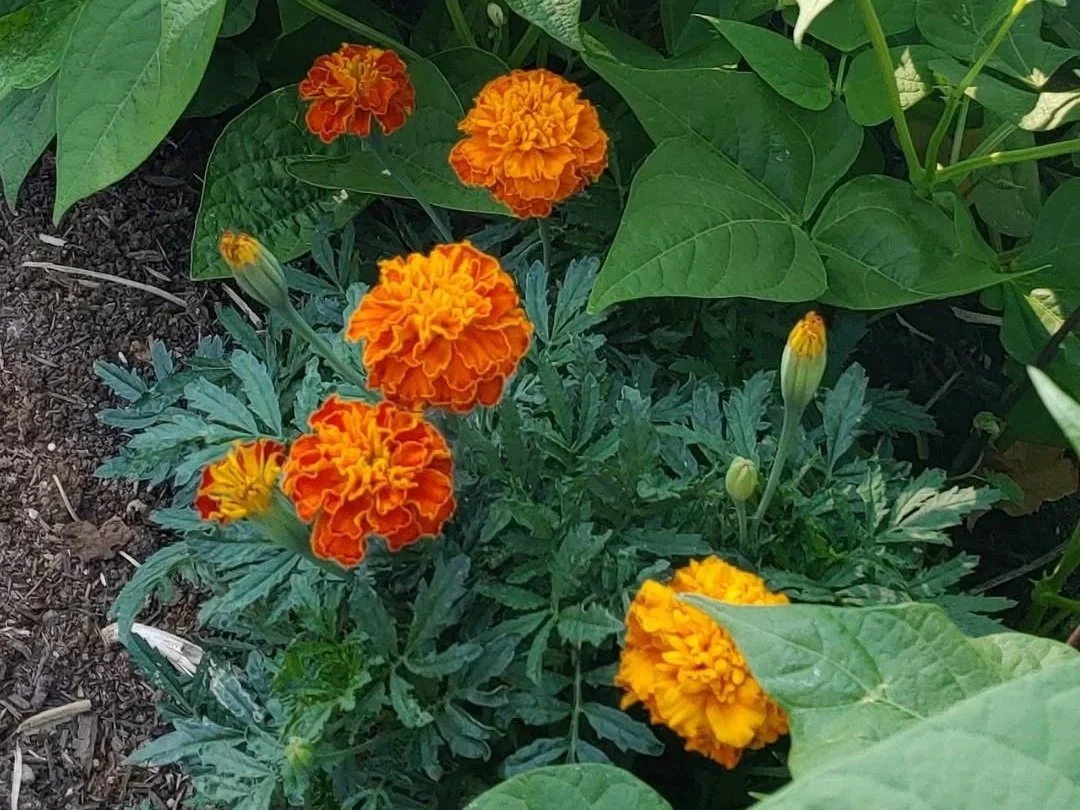
Marigolds earn their place in almost every bed I plant. They repel aphids, attract pollinators, and their roots release a compound that deters nematodes in the soil. Chives do similar work — their allium compounds repel aphids and beetles, and their purple flowers are irresistible to bees. Lavender brings pollinators from across the garden and its scent deters a range of pest insects. Garlic planted at the base of cane berry canes repels aphids quietly and effectively.
And beans — particularly bush beans — fix nitrogen in the soil, feeding the cane berries without any intervention from you. What I love about this combination is that by harvest time, you're not just picking berries. You're walking through lavender, snipping chives for dinner, pulling garlic, picking beans. The companions earn their place in the kitchen as well as the garden.
What to avoid near cane berries.
Tomatoes and potatoes should not be planted near boysenberries, raspberries, or blackberries. Both are nightshades that share diseases with cane berries — planting them in proximity increases the risk of spreading fungal and bacterial problems that can be difficult to manage once established. Keep them on the opposite side of the garden.
The common kitchen garden companions.
For tomatoes — basil is the classic companion, believed to repel thrips and aphids while attracting pollinators. Marigolds belong here too. What tomatoes don't want: fennel, which inhibits their growth, and — as noted — proximity to your cane berry beds.
For cucumbers, nasturtiums are your best companion — they attract aphids away from the cucumbers and are entirely edible. Dill attracts beneficial predatory insects that feed on cucumber beetles. For peppers, chives and basil both offer pest-deterrent benefits, and carrots planted nearby loosen the soil around pepper roots without competing for nutrients.
The simplest place to start.
Add marigolds to every bed. That one decision — inexpensive, easy, available at your local nursery right now — will improve almost every kitchen garden in Nevada County. And if you sow a second round of marigold seeds in three weeks, you'll have a continuous supply of fresh flowers through the season — more pollinators, more pest deterrence, and the kind of abundance that comes from thinking in succession rather than all at once. If you're not yet familiar with succession planting, that post is worth a read — it's one of the practices that keeps a Nevada County garden producing long after a single planting would have faded.
From there, add one intentional companion per crop — basil with tomatoes, nasturtiums with cucumbers, garlic and lavender with your cane berries — and pay attention to what you observe. The garden is a patient teacher.
And if you'd like someone to show up in your actual backyard and help you think through what belongs where — book a free Garden Chat. That's where we start.
Want more Nevada County gardening advice specific to our Sierra Foothills climate? I send one email every Wednesday — seasonal, practical, and built for where we live. → Join the newsletter here
Ellie is a third-generation kitchen gardener, Certified Garden Coach, and Permaculture Design Consultant with 25 years of growing in Western Nevada County. She tends a one-acre homestead in Grass Valley with her two cats, chickens, and honeybees. She can also be found volunteering in her community as a Master Gardener of Nevada County.
Her work is rooted in a simple belief — that every woman who grows her own food carries that knowledge forward into her home, her community, and the next generation.
If you're ready to carry that knowledge forward in your own backyard, she'd love to help you get started.
