

How to Know When to Harvest — Reading Your Garden Before the Day Gets Warm
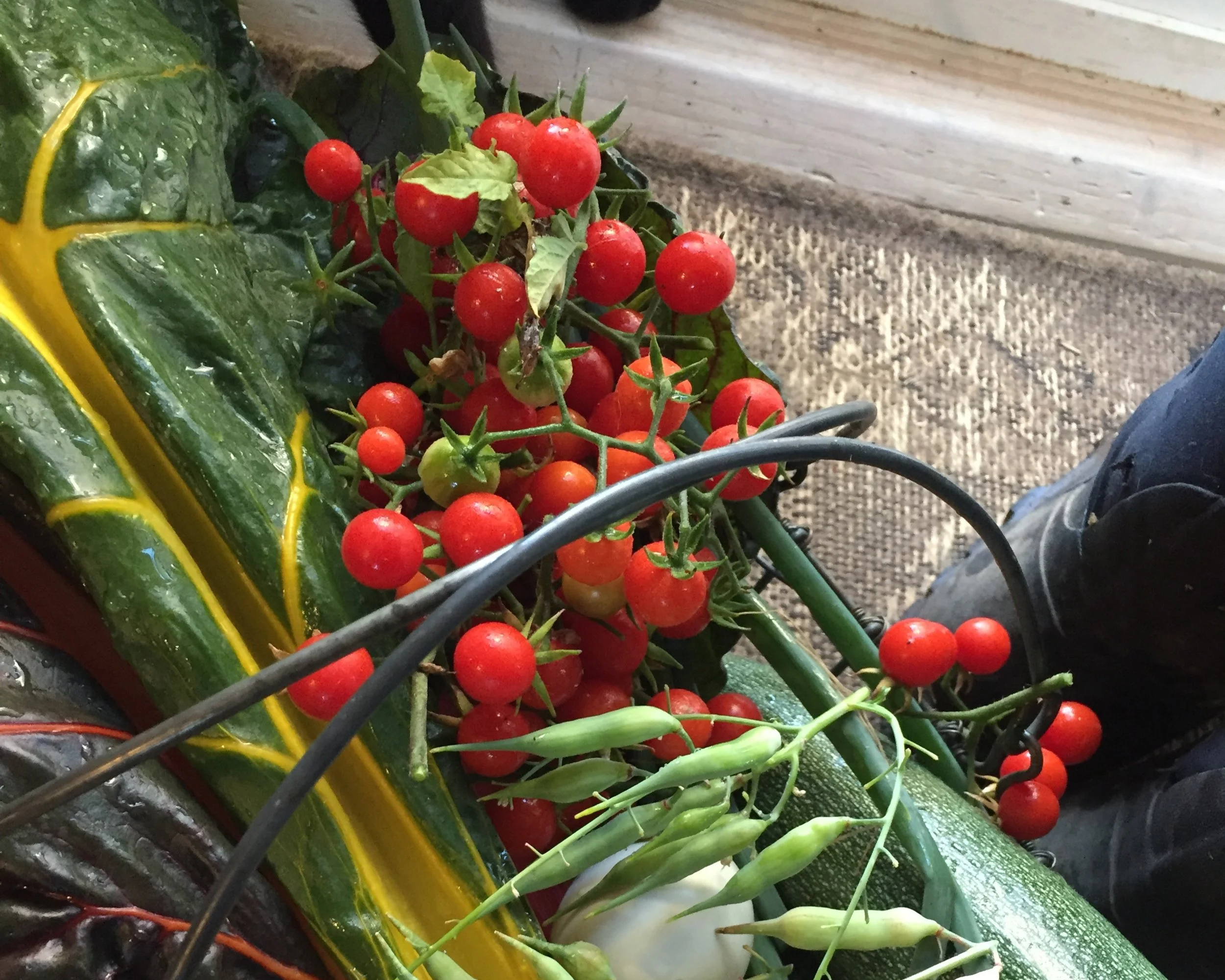
Before coffee. Before exercise. Before the day got warm.
I did my garden check at first light — moisture gauging, watering where needed, a quick walk through to see what the night had brought. The garden is still small this season, a mix of vegetables and flowers, and I was done in twenty-five minutes. I cut lemon thyme and mint for sun tea. Picked strawberries and blueberries for breakfast. Wyatt talked to me the whole time in that way cats have of narrating a morning they consider theirs by right.
It was peaceful and quiet. Just birds and a cat and the sound of the garden before the traffic noise of the day started.
And those strawberries — cool from the night, deep red all the way through, soft under my thumb — were exactly right. Not a day early. That knowledge, the ability to read a fruit or vegetable for peak ripeness, is one of the most useful things a kitchen gardener can develop. Here's how to build it.
The general rule — and why it matters.
Most vegetables are best harvested on the young side of ripe rather than the old side. A zucchini picked at six inches is more tender and flavorful than one left to become a baseball bat. A bean snapped before the seeds inside it have fully swelled is crisper and sweeter than one that's gone starchy. A tomato picked just before full peak ripeness will finish ripening off the vine without losing its texture.
Harvesting regularly also signals to the plant to keep producing. A zucchini plant that's left with an overgrown fruit on it will slow or stop setting new ones. Pick often and the plant responds with more.
Crop by crop — what to look for.
Tomatoes — color is the most obvious indicator but not the only one. A ripe tomato gives slightly to gentle pressure — not mushy, just yielding. It releases from the vine with a gentle twist rather than requiring force. In a heat wave, tomatoes may color up faster than they ripen inside — check with the squeeze test, not just your eyes. Once blossom drop passes and fruit sets, most tomato varieties take 45 to 65 days from fruit set to harvest depending on the variety.
Zucchini and summer squash — harvest at 6 to 8 inches for best flavor and texture. The skin should be glossy and yield slightly to a fingernail. Check daily once they start coming — zucchini can go from perfect to overwhelming in 48 hours in summer heat.
Beans — snap beans are ready when the pod is firm and snaps cleanly rather than bending. The seeds inside should be small — once the bean pod starts to bulge with developed seeds it's past peak. Harvest the whole plant regularly to keep production going.
Cucumbers — harvest before they yellow. A green cucumber that's turning pale at the tip is ready now. One that's yellowing at the base has gone past peak and will taste bitter. Pick on the young side and the plant will keep producing through summer.
Strawberries and berries — fully colored, slightly soft, and separating easily from the plant. A strawberry that needs to be pulled has another day on the vine. One that comes with a gentle touch is exactly right. Pick in the morning before heat builds — berries deteriorate quickly in warmth.
The morning is the best time.
There's a reason I do my garden check at first light. In the morning, before the heat builds, vegetables are at their most turgid — full of water, crisp, flavorful. A tomato picked in the morning heat is better than one picked in the afternoon. Herbs cut before they flower are more aromatic than those cut midday. The garden rewards early attention.
Consistent watering through the ripening period is what keeps produce developing evenly — inconsistent moisture causes blossom end rot in tomatoes, splitting in both tomatoes and cucumbers, and uneven ripening across the plant. Keep the moisture steady and the harvest will follow.
And while you're harvesting — keep planting in short rows every two to three weeks. The bed you harvest from this week can have a new round of beans or a fall crop of lettuce going in by next week. The season is longer than most people realize.
If you want someone to show up in your garden and help you actually do this — that's Guided. Four weeks, your yard, your harvest. Book a free Garden Chat to see if it's a fit.
Want more Nevada County gardening advice specific to our Sierra Foothills climate? I send one email every Wednesday — seasonal, practical, and built for where we live. → Join the newsletter here
Ellie is a third-generation kitchen gardener, Certified Garden Coach, and Permaculture Design Consultant with 25 years of growing in Western Nevada County. She tends a one-acre homestead in Grass Valley with her two cats, chickens, and honeybees. She can also be found volunteering in her community as a Master Gardener of Nevada County.
Her work is rooted in a simple belief — that every woman who grows her own food carries that knowledge forward into her home, her community, and the next generation.
If you're ready to carry that knowledge forward in your own backyard, she'd love to help you get started.
