

How to Plant Garlic and Greens in Nevada County This Weekend
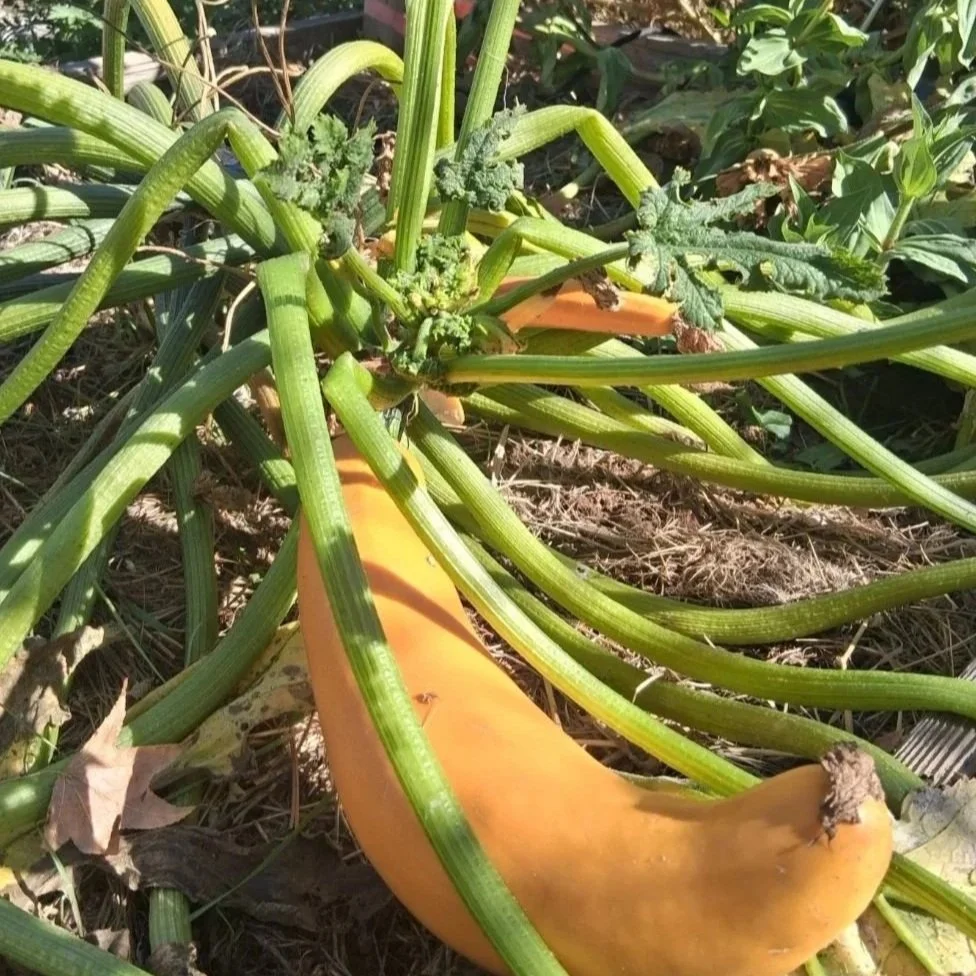
Yellow squash growing to seed.
A little notebook goes along on every garden walk now. It collects things worth remembering for next year and improvements worth making before spring. This week the weather was pleasant enough for Wyatt to join in.
Late October is when plenty of Nevada County beds start to look finished. Tomato vines have given up, squash plants are sagging, and the first frost is close. Almanac averages put it around November 5 in Grass Valley and November 10 near Nevada City. That's when the question shows up. Is it too late to plant anything?
Not at all. Garlic goes in now, and so do greens and root crops. One row of each goes in here this weekend as part of the succession planting plan, right after Wednesday's rain.
Your Garden Cheat Sheet Plant this weekend, after the rain
First, let the rain soak in, then check the soil. Rain is in the forecast for Wednesday. By the weekend the soil should be damp, not soggy. Squeeze a handful. If it holds together and then crumbles when poked, it's ready. If it smears or shines, wait another day. Digging in wet clay squeezes out the air roots need, and the clumps last all winter.
Second, plant the garlic. Break the head into single cloves a day or two ahead, keeping the papery skins on. Set each clove pointy end up, about 2 inches deep and 4 to 6 inches apart. Cover with soil, then add 3 to 4 inches of straw or leaves.
Third, sow the greens and roots. Spinach, arugula, mustard greens, and radishes all germinate in cool soil. Starts of kale, chard, and lettuce from a local nursery get a head start on seed this late in the year.
Fourth, keep a sheet handy. If frost shows up in the forecast, drape row cover or an old bedsheet over the greens overnight and take it off in the morning.
Why garlic goes in now
Garlic asks two things of fall. It needs time to root before the soil gets cold, and a long stretch of cold to trigger bulb formation. Planting in late October and November delivers both. A clove put in this weekend grows roots over the next few weeks, then spends the winter quietly putting up green shoots and waiting for spring.
In this garden, one row of greens and root crops and one row of garlic are going in as part of the succession planting plan. Doing both on the same afternoon keeps the project small enough to finish before dinner.
What I'd do differently next year
The notebook holds more than planting dates. There is evidence in the beds that too many calendula volunteers were allowed to stay. They smothered some of the late-planted tomato vines, and those vines couldn't recover after the deer's first visit. Next year calendula gets the pathways, and the beds stay clear. Live and learn.
I'm still undecided as to how many beds get a cover crop this winter and how many get mulch. Want more on closing out the season? Here's a post on putting a Nevada County garden to bed for winter. Pulled stalks and fallen leaves from cleanup can feed the compost pile too, and a post on turning your garden scraps into gold covers how.
Picture a morning in March, coffee in hand. Garlic is standing tall in one row, the greens have been on the table since Thanksgiving, and the notebook has a short list of what worked. That's the point of the notebook. Each mistake turns into next year's plan.
Now the next bare bed won't raise the question. The free guide Lettuce Grow Together lists frost dates by town and a quick win in every part, so "is it too late to plant?" gets an answer in a minute, any time of year. Get Lettuce Grow Together free.
If you'd like someone to walk your garden with you and map out what comes next — that's an In-garden Consultation. One visit, your yard, a clear plan. Book your In-garden Consultation.
Ellie is a third-generation kitchen gardener, Certified Garden Coach, and Permaculture Design Consultant with 25 years of growing in Western Nevada County. She tends a one-acre homestead in Grass Valley with her two cats, chickens, and honeybees. She can also be found volunteering in her community as a Master Gardener of Nevada County.
Her work is rooted in a simple belief — that every woman who grows her own food carries that knowledge forward into her home, her community, and the next generation.
