

How to Prepare Your Nevada County Vegetable Garden for Winter
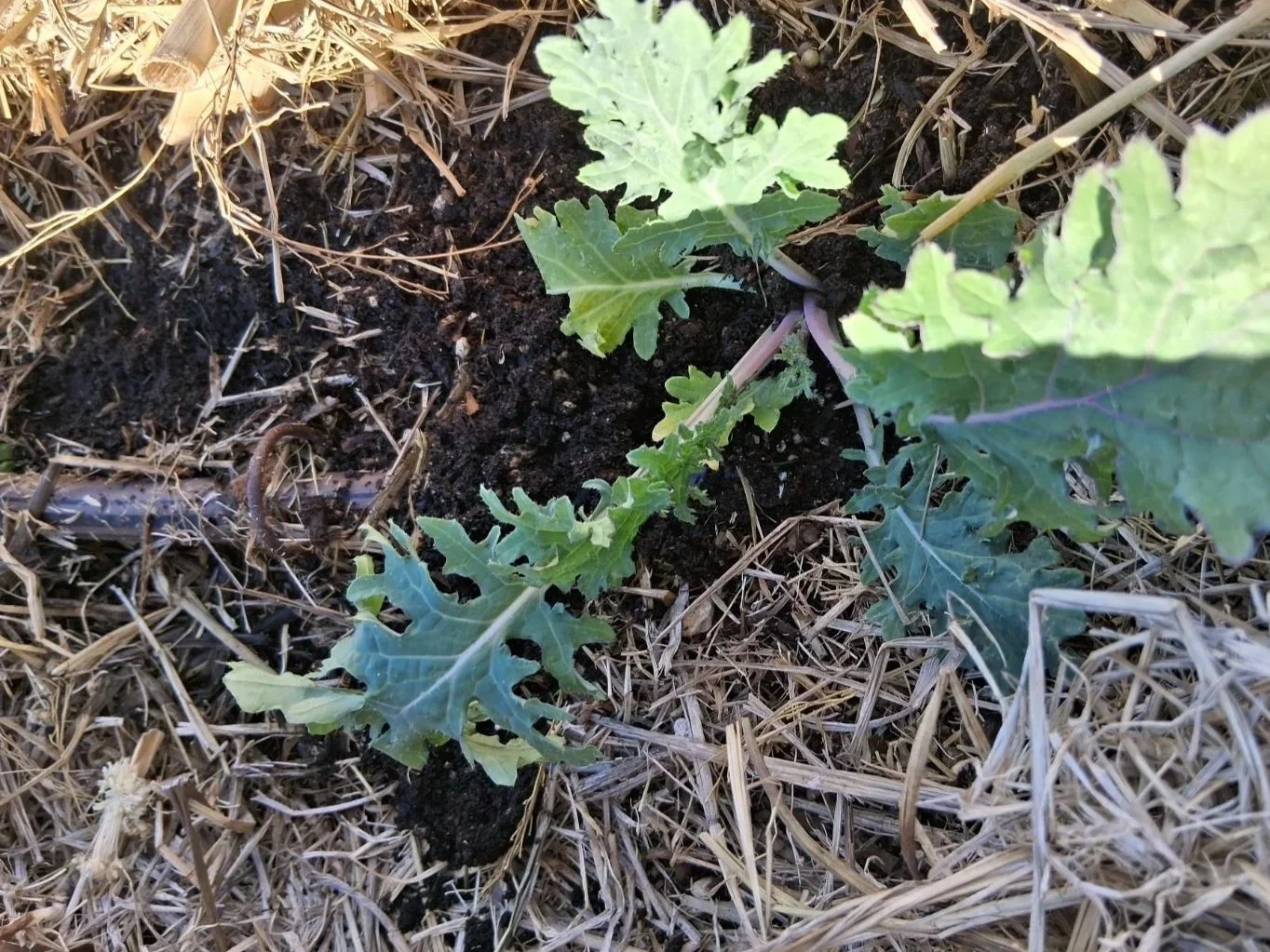
straw mulch and kale
The morning was too warm for October. No dew on the squash leaves, no cool green smell rising from the beds, just dry air that already felt like noon. Wyatt was stretched out in the shade and watched me with the look of a cat who knew exactly what the thermometer was doing.
The plants didn't seem to mind. Water delivered at ground level and a thick layer of mulch had kept the soil temps steady while the air swung hot. Covering the soil is the whole story of putting a garden to bed. The soil carries everything forward into next year. The plants are only passing through.
By October, most vegetable gardens look tired. Tomato vines have gone leggy and brown, the last squash is hiding under a leaf, and a quiet voice says, "I'm done. I'll deal with it in spring." So the beds are left bare. Winter rain packs down exposed soil, weeds drop their seed, and by April the first warm weekend goes to rescue work instead of planting.
The one thing worth doing: cover the soil
Bare soil is the one thing a winter garden can't afford. Covered soil stays loose, holds moisture, and keeps its microbes and earthworms working through the mild days of winter.
Two covers do the job. My pick is a winter-kill cover crop. Mulch is the quicker one for beds you can't sow.
Winter-kill cover crop
A winter-kill cover crop is sown in October and dies back on its own when the cold arrives. I sow a mix of two or three: oats for a thick root mat, daikon radish, whose deep roots open up packed soil and then rot away, and lentils, which add nitrogen. Until the frost, the roots hold the soil and the green tops shield it from winter rain. After the frost, the dead plants fall into a mat that works as mulch. There is nothing to cut and nothing to turn under in spring, so the soil stays undisturbed and nothing slows down planting. Sow the seed, rake it in lightly, and water once if the rains are late.
In March, plant straight through the mat. Pull it aside for seed rows, or poke transplants right through it.
Mulch
Spread three to four inches of straw, shredded leaves, or arborist wood chips over any bed you won't be sowing. Pull it two or three inches back from stems and crowns, so moisture doesn't sit against the plant and rodents don't settle in. Fall hands out free mulch: oak leaves from the yard, straw from a feed store, wood chips from a local tree crew.
A short fall checklist to go with it
Pull plants as they finish, and weed before the seed ripens.
Send healthy plant material to the compost pile Here is how to start one. Diseased plants go to green waste instead.
Cut beans and peas at soil level and leave the roots in the ground.
Disconnect hoses and protect spigots and drip lines before the first hard freeze.
Plant garlic into a mulched bed in October.
What this looks like in my garden
This October, the garden is still giving. The summer beds might just offer a few more harvests. The two beds of cool-season vegetables need extra mulch to keep the ground cool through the heat wave, and more greens are succession planted a couple of weeks apart because the first sowing might not make it through this heatwave. Rodent damage is the one setback I'm still working on. That's just life in the garden.
Where this leads
Picture the first mild morning in March. The cover crop has done its work and lies in a soft mat across the bed. Lift a corner and the soil underneath is dark and crumbly, with an earthworm curled in it and the smell of a forest floor after rain. No tilling, no digging, no hard crust to break through. Peas go in that afternoon.
October is also the easiest month to plan for spring 2027. If you'd like someone to walk your summer garden with you and map out what comes next — that's an In-garden Consultation. One visit, your yard, a clear plan. Book your In-garden Consultation.
Want more Nevada County gardening advice specific to our Sierra Foothills climate? I send one email every Wednesday — seasonal, practical, and built for where we live. → Join the newsletter here.
Ellie is a third-generation kitchen gardener, Certified Garden Coach, and Permaculture Design Consultant with 25 years of growing in Western Nevada County. She tends a one-acre homestead in Grass Valley with her two cats, chickens, and honeybees. She can also be found volunteering in her community as a Master Gardener of Nevada County.
Her work is rooted in a simple belief — that every woman who grows her own food carries that knowledge forward into her home, her community, and the next generation.
If you're ready to carry that knowledge forward in your own backyard, she'd love to help you get started.
