

How to Turn Fall Garden Waste and Kitchen Scraps Into Compost in Nevada County
Twenty minutes between Zoom calls is not much time. It was enough for a glass of lemonade, a pair of clippers, and a walk between the rows.
The clippers went to work on dying stems with brown leaves, then on a few growing tips. Wyatt advanced from the direction of the compost bin, his favorite spot for spying on voles, and demanded attention. Somewhere between the clipping and the petting, the thought arrived: all of this is about to start the next compost pile. Maybe this is the year that pile gets turned, so it is ready by spring.
That is the quiet math of late September. Every fall, a garden makes a mountain of stems, leaves and clippings, and the kitchen sends out a bucket of scraps every week. Most of it heads for the curb. Compost is the fix: it turns that waste into dark, crumbly soil conditioner. Foothills soil, whether red clay or decomposed granite, is usually short on organic matter, so it welcomes every bit.
The mix that makes compost work
Those clippings were a compost recipe in miniature. Dry brown stems are rich in carbon, which gives the microbes energy. Green growing tips are rich in nitrogen, which lets them multiply. A pile works when the two show up in balance, and gardeners call that balance the carbon-to-nitrogen ratio.
A good working mix for a backyard pile is about two to three parts brown to one part green, measured by volume. With too much green, the pile turns wet, slimy and sour. With too much brown, it sits there, dry and slow. Fall hands over the browns for free: oak leaves, spent stalks, straw, shredded cardboard. The garden supplies greens too, and the kitchen adds more.
Water the pile as it builds until the material feels like a wrung-out sponge. Squeeze a handful: it should hold together and release only a drop or two. Damp, never dripping.
What goes in from the kitchen
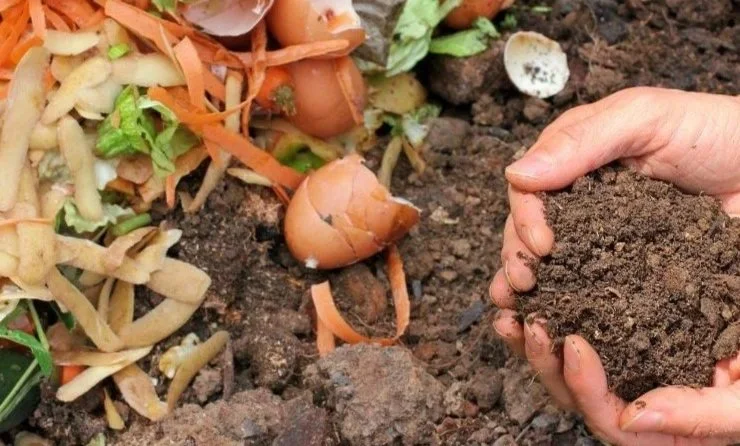
Fruit and vegetable trimmings, coffee grounds with their paper filters, and crushed eggshells all belong in the pile. Chop bigger scraps small, since a melon rind breaks down much faster in pieces than whole. Meat, fish, dairy and greasy leftovers stay out. In Nevada County the reason has less to do with chemistry and more to do with the guest list: raccoons, rodents, and in some neighborhoods, bears. The vole patrol at this compost bin already has a full-time supervisor.
Most of the material comes from fall clean-up. The September harvest and planting guide covers what comes out of the beds and what stays in. For ideas on getting more from the harvest before it becomes scraps, there is this post on cooking from the garden.
Turning a fall pile so it is ready by spring
Turning matters more than most people expect. A shovel or fork moves the outer material to the middle and works oxygen back in, which keeps the microbes busy and the pile from going sour. Mix your browns and greens as you go, give the pile a turn every couple of weeks while the days stay mild, and it has a fair chance of being ready to spread by spring planting. Foothills nights will cool soon, and cold slows the microbes, so the early turns count the most. A bin or a simple wire cage keeps the pile together, and a tarp keeps winter rain from soaking it.
Picture April. A raised bed forks open to dark, crumbly compost that smells like the forest floor after rain, and the tomato starts go into the best soil in the yard. That soil started as a handful of dying stems and growing tips on a September afternoon.
If you'd like someone to walk your garden with you and map out what comes next — that's an In-garden Consultation. One visit, your yard, a clear plan. Book your In-garden Consultation.
Want more Nevada County gardening advice specific to our Sierra Foothills climate? I send one email every Wednesday — seasonal, practical, and built for where we live. → Join the newsletter here.
Ellie is a third-generation kitchen gardener, Certified Garden Coach, and Permaculture Design Consultant with 25 years of growing in Western Nevada County. She tends a one-acre homestead in Grass Valley with her two cats, chickens, and honeybees. She can also be found volunteering in her community as a Master Gardener of Nevada County.
Her work is rooted in a simple belief — that every woman who grows her own food carries that knowledge forward into her home, her community, and the next generation.
