

What a Local Chef Knows About Cooking From the Garden That Most Gardeners Don't
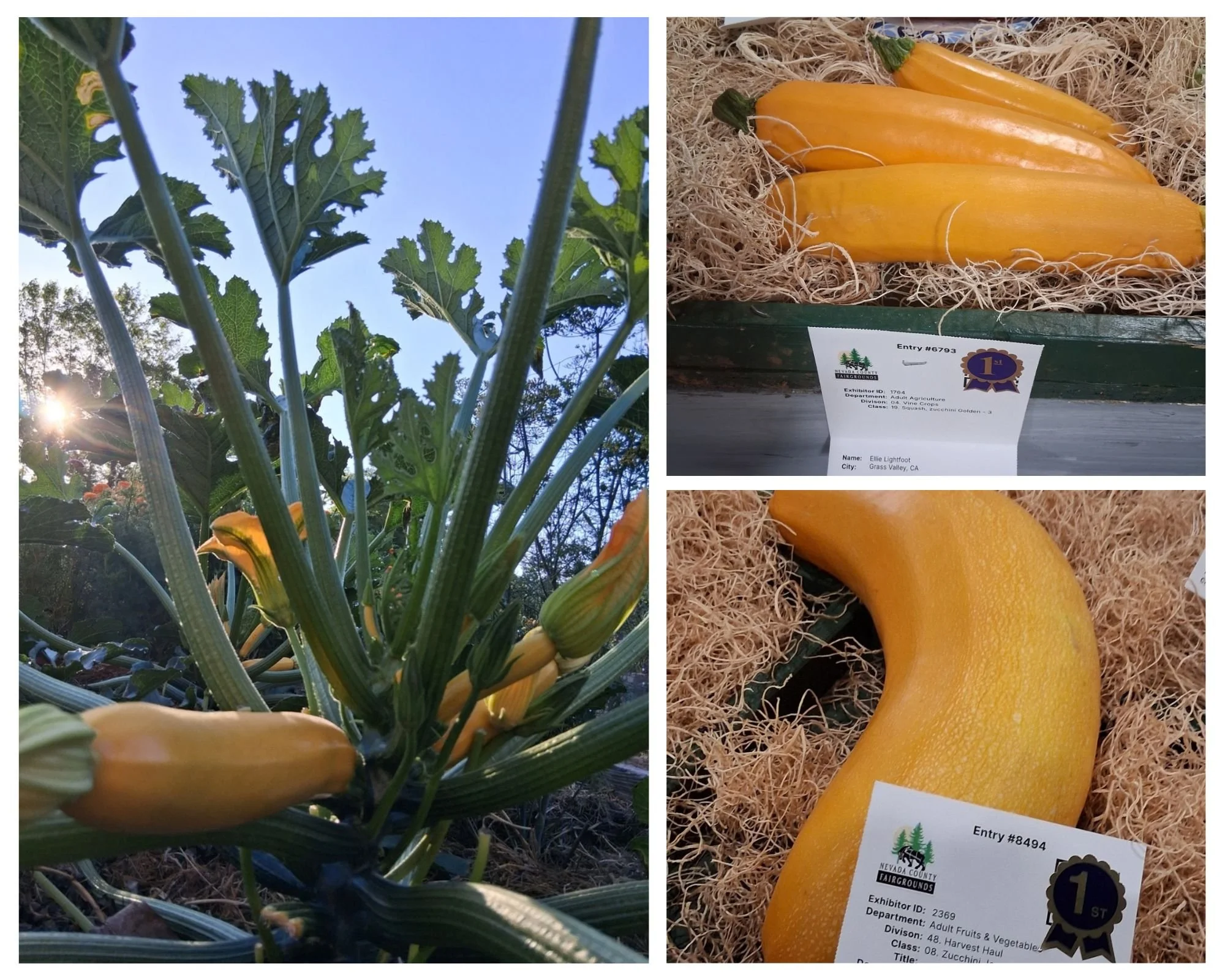
Yellow zucchini squash and golden sunlight
I took my coffee to the garden on a chilly September morning and stayed longer than I planned.
The plants are lush and green and full of the summer's work — giant squash heavy on the vines, cranberry-colored cosmos and bright zinnias nodding in the cool air. I was harvesting for the Nevada County Harvest Fair this week, pulling the best of what the season has produced. My fall garden plan was open on my lap alongside last year's hit or miss list. Wyatt and Cody were nearby doing what they always do — acting like the garden belongs to them.
This is my favorite time of year to sit in a garden. Everything is ripe or nearly so. The work of spring is paying out.
And yet — I know from coaching that this is exactly when a lot of home gardeners get stuck. The garden is producing more than they know what to do with. The zucchini is enormous. The tomatoes are coming in faster than they can be eaten. The husk cherries are splitting their papery husks and piling up in a bowl on the counter. Growing the food turned out to be the easier part. Knowing what to do with it is a different skill entirely.
That's why I called Susan Gouveia.
Susan is a private chef, culinary educator, and the founder of the Society of Garden Goddesses — a garden club here in Grass Valley that meets monthly at Weiss Bros Nursery for Happy Gardening Hour. She's been cooking with locally grown and homegrown produce for thirty years. It started when she got sick and no doctor could fix it. She switched to organic food, started growing her own herbs, flowers, and fruit a few years later, and hasn't looked back. She founded the Garden Goddesses eighteen years ago to share what she was learning and has been teaching women to cook from the garden ever since.
This week she's cooking with yellow zucchini from my garden. I asked her what she knows about cooking from the harvest that most home gardeners don't.
The flavor difference is real — and it starts in the soil.
Ask Susan which vegetables taste most different homegrown versus store-bought and she doesn't hesitate. Tomatoes — Greg's tomatoes especially, a name known to anyone who's tasted them. Lettuce is sweeter. Peaches ripened on the tree rather than in a truck.
"Soil quality," she says. "No man-made additives. More time to ripen on the plant."
That last part is the one most people don't think about. A tomato picked for a grocery store is harvested before peak ripeness so it can survive shipping. A tomato picked from your garden this morning was on the vine until yesterday. The flavor difference isn't subtle.
"Sweeter. No cardboard taste. I’ll be wanting some more."
That's Susan on the yellow zucchini from my garden. That's the whole argument for growing your own, right there.
She's also noticed it with children. In her cooking classes, kids who turn their noses up at store-bought vegetables will eat homegrown ones without being asked. "They've learned how to try new foods," she says. Not because anyone convinced them to — but because the food actually tasted like something.
What to do when the garden is producing faster than you can cook.
When a home gardener shows up in Susan's cooking class with a bag of zucchini they don't know what to do with, Susan starts simple. Grate it and mix it into ground meat. Add it to cooked rice with a squeeze of lemon. Let the vegetable do what it does best — absorb flavor, add texture, disappear into a dish so quietly that nobody knows it's there until you tell them.
The biggest mistake she sees home cooks make with fresh garden vegetables? Cooking them the same way every time and never trying anything new. And leaving them to rot in the crisper because dinner felt complicated. Not involving kids or family in the process.
"Make cooking fun," she says. "Make it a party. Include friends and family."
Her simplest technique for making homegrown vegetables shine: steam them and add lots of herbs. That's it. Good produce doesn't need much. The garden already did the hard work.
What's worth cooking right now in Nevada County.
Susan is excited about chayote squash this September — a mild, pear-shaped vegetable that grows well in our climate and almost nobody uses. Her method: slice it, steam it with herbs, salt, and pepper. Nothing more. It's the kind of vegetable that rewards simplicity.
And if you find yourself with more zucchini than you know what to do with — Susan has a recipe for that too. Her "10 Things to Do with Zucchini" is part of the ‘Recipes from Garden Goddesses’ cookbook, which is exactly the kind of resource that lives on a kitchen counter and gets used.
What she'd say to the gardener who doesn't know how to cook what they grow.
"Take a cooking class. Make cooking fun. Make it a party."
Susan teaches cooking classes here in Nevada County, and the Society of Garden Goddesses meets monthly at Weiss Bros Nursery — open to anyone who loves plants, food, and good company. Find her at Society of Garden Goddesses.
The garden grew the food. The kitchen is just the next room over.
And if you'd like someone to show up in your actual backyard and help you think through what belongs where — book an in-garden consultation here. That's where we start.
Want more Nevada County gardening advice specific to our Sierra Foothills climate? I send one email every Wednesday — seasonal, practical, and built for where we live. → Join the newsletter here.
Ellie is a third-generation kitchen gardener, Certified Garden Coach, and Permaculture Design Consultant with 25 years of growing in Western Nevada County. She tends a one-acre homestead in Grass Valley with her two cats, chickens, and honeybees. She can also be found volunteering in her community as a Master Gardener of Nevada County.
Her work is rooted in a simple belief — that every woman who grows her own food carries that knowledge forward into her home, her community, and the next generation.
If you're ready to carry that knowledge forward in your own backyard, she'd love to help you get started.
