

What's the Best Garden Planning Book for a Nevada County Kitchen Garden?
The garden walk happened late one morning this fall, and it was still chilly. Wyatt didn't even follow me out. The lettuce and greens were putting on new leaves, and the radishes were poking up through the soil. The last of the summer crops will come out over the next few weekends, after every bed has been photographed for future planning sessions. The next succession planting is coming up in my garden, and carrots may join the lineup once the varieties have been reviewed.
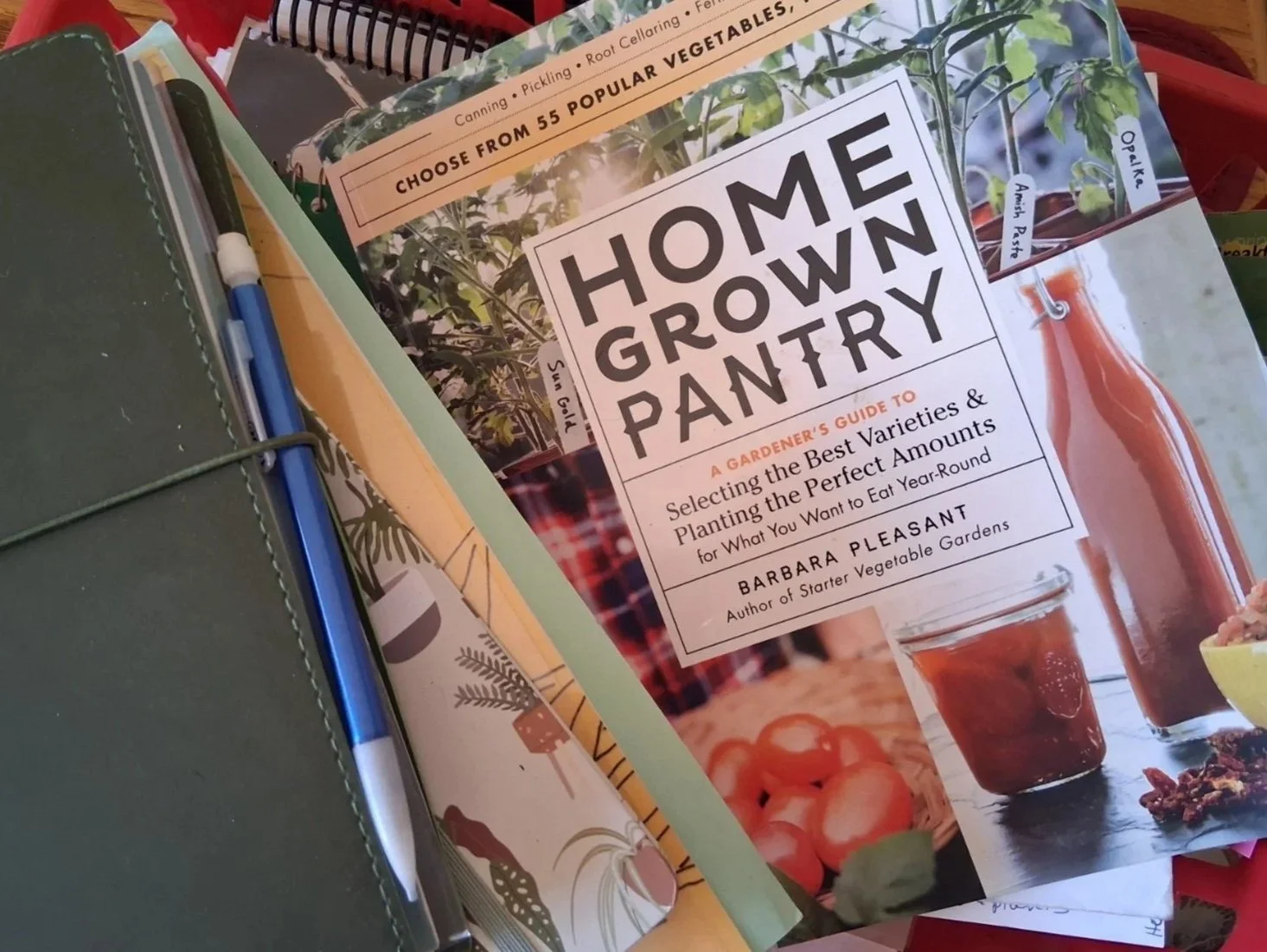
Many walks like this end at the same question: what goes in next, and how much? It's also the question behind one of the best garden planning books I read this year, Home Grown Pantry by Barbara Pleasant (Storey Publishing). It was one of the first gardening books I read cover to cover. The corners are dogeared, and it comes back off the shelf every season.
The heart of the book is a set of profiles for the 55 most popular crops, including beans, beets, squash and tomatoes. Each profile says how many plants to grow for a year's worth of eating, and which storage methods work best for specific varieties. That pairing of plant counts with storage advice is what makes it a planning book rather than a growing guide.
The pictures are gorgeous, and they earn their space. They show plants at maturity, along with seeds and leaves, which makes them useful for identifying what is growing in the garden. They also kept me reading.
How to use it in the garden and the kitchen.
I use it to decide how much space each variety gets. Overplanting takes up space and water that I'm trying to conserve. Underplanting leaves me without enough to fill a full canner. The plant counts sit between those two problems.
Bush beans were a surprise. The book suggests a 15-foot row per person, with seeds sown 4 inches apart. That works out to 45 plants for one person. When I first read Home Grown Pantry, most of my quantities were simply what the seed envelope suggested. A seed packet is sized to sell seed, not to fill a pantry shelf, and the gap between the two was bigger than I expected.
Variety advice matters just as much. Growing dry beans has long been a desire of mine, and the book suggested Calypso, so I plant it often. The results are off and on, because ground rodents and I are in a running battle over the crop.
The kitchen side surprised me too. So many things can be dried. I started drying ingredients for soups and casseroles, because the longer cook time gives the dried food time to rehydrate fully. Freezing is a useful tool for a harvest that arrives faster than the canner can handle. One year my Concord grape harvest was too big to process all at once, so I froze a lot of it until January and then canned it as juice.
The pages I keep returning to are dogeared: beets, carrots, cabbage and cucumbers. Some of those crops come from the farmers market instead of my own beds, and the preserving techniques work the same way on a market haul.
Who is Home Grown Pantry for?
This book is a good fit for sophomore gardeners, the ones past their first and second season who are ready to plan on purpose. It can also help freshman gardeners dream the garden dream. The one thing to keep in mind is that not everything needs to go into the pantry. Choose a few crops that earn their place on the shelf, and enjoy the rest fresh.
How much should a Nevada County household plant?
That is the problem Home Grown Pantry answers, and household size sets every number. The bean example scales the same way: a household of two bean eaters needs twice the row of a household of one. A household also eats two ways, so the math comes in two parts.
For the pantry: the garlic math
Garlic does the math out loud, because one clove planted becomes one head harvested.
1. Count the heads of garlic the household uses in a typical month.
2. Multiply by the number of months to eat from storage.
3. The answer is the number of cloves to plant.
Timing matters as much as quantity. Garlic goes in about 30 days before the first frost. The Farmer's Almanac puts the average first frost in downtown Grass Valley near November 5, so count back 30 days from that date. Yards run a week or more off these dates, so the forecast has the last word. Not sure of a neighborhood's date? Search first and last frost dates by ZIP code at almanac.com.
For the garden: fresh eating
Fresh crops run on a different rhythm. A whole packet of lettuce planted at once means a salad glut and then a break. Count the salads, stir-fries and side dishes a week that come from the garden, and plant a short row sized to those meals. Add a new short row every two weeks. Lettuce, greens and radishes all suit this rhythm.
Every crop then goes into one of three columns: Eat fresh, Storage, or Preserve. Greens and radishes belong in the first. Crops that keep in a cool spot, like garlic, belong in the second. Big, short-lived harvests belong in the third, each with one preserving method chosen ahead of time. One method per crop keeps the pantry plan from turning into a second job. Write the three columns on a sheet of paper and the plan for the year is in front of you. The next steps below turn that sheet into a to-do list.
List the five foods the household eats most in a week, and mark each one Eat fresh, Storage or Preserve. Those anchor the plan.
Do the garlic math and order seed garlic. Peaceful Valley has a good selection.
Photograph every bed before pulling a single summer plant. Then see how to put the garden to bed for winter here and what to do with the plant material in the post on fall composting .
There's more where that came from. Lettuce Grow Together, my free guide, lays out the rest of the season in order, one small win at a time, from first planting to first harvest
Home Grown Pantry makes a great gift for any gardener who dreams of a full pantry. A book can't walk a yard, though. It doesn't know which bed gets the afternoon sun, where the frost settles, or how many beds there are. An In-garden Consultation does. One visit, your yard, and a clear plan, whether that's a summer review, a fall planting plan, or a walk-through for putting the garden to bed for winter.
Book your In-garden Consultation here.
Want more Nevada County gardening advice specific to our Sierra Foothills climate? I send one email every Wednesday: seasonal, practical, and built for where we live. Join the newsletter here.
Ellie is a third-generation kitchen gardener, Certified Garden Coach, and Permaculture Design Consultant with 25 years of growing in Western Nevada County. She tends a one-acre homestead in Grass Valley with her two cats, chickens, and honeybees. She can also be found volunteering in her community as a Master Gardener of Nevada County.
Her work is rooted in a simple belief — that every woman who grows her own food carries that knowledge forward into her home, her community, and the next generation.
If you're ready to carry that knowledge forward in your own backyard, she'd love to help you get started.
