

Your Plants Are In the Ground. Now What? Watering and Mulching in a Nevada County Summer Garden.
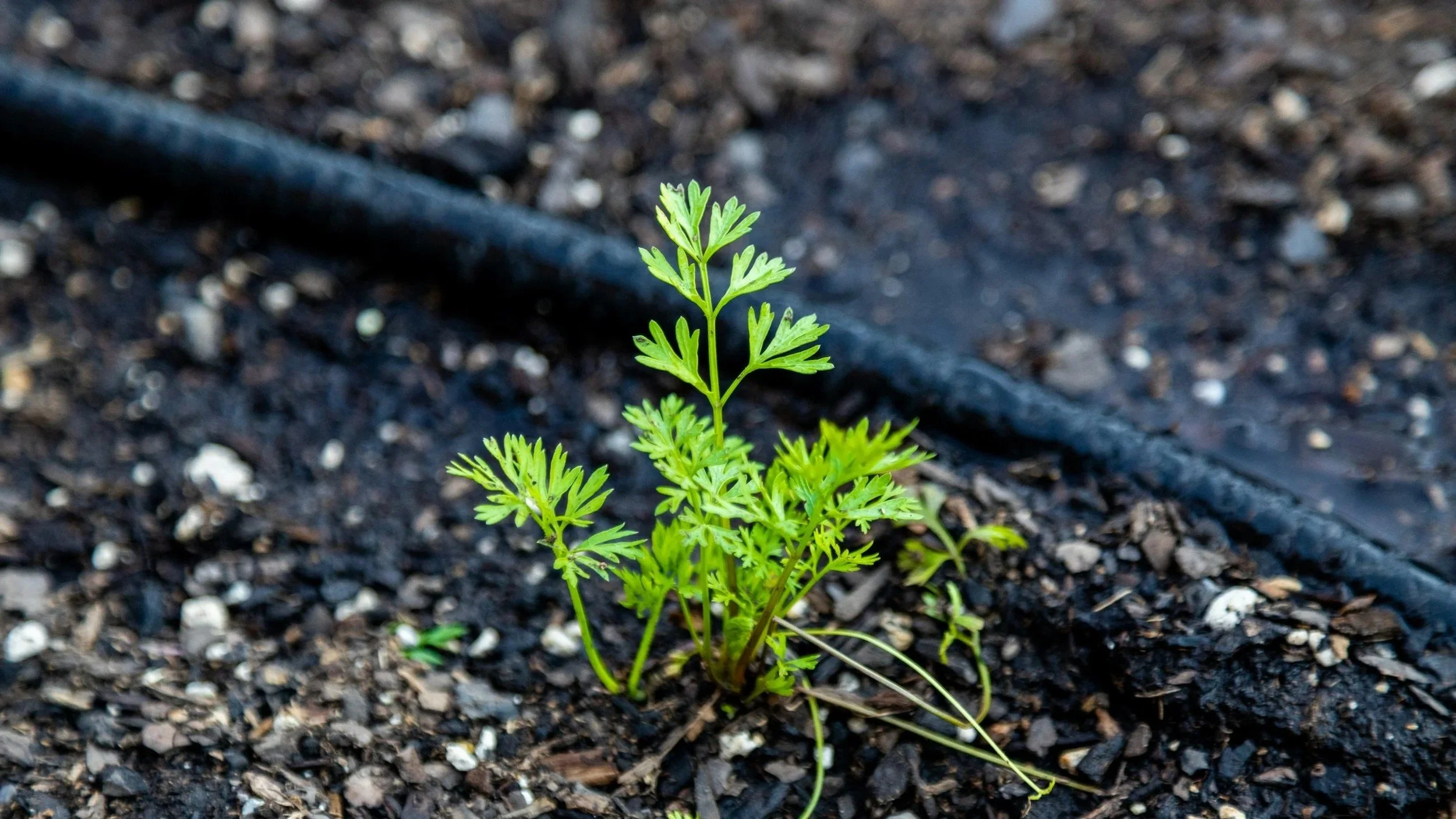
Drip line for precision watering in Nevada County
Sunday slid into Sunday evening with sun-kissed skin and tired muscles. With night arriving at 8:30, the day was long — scattered clouds, moderate temperatures, the kind of day that makes it easy to stay in the garden from morning until the light finally goes. As I made space for more starts and seeds I found myself smiling, contemplating what this garden will look like in six weeks. Peppers leafed out. Cucumbers reaching for the sky. And somewhere in there, a first ripe tomato warmed by the sun, waiting for me to come find it.
Oh what a feeling.
If you planted Mother's Day weekend — or you're still getting things in the ground this week — you know that feeling too. The hard work of planting is done. Now the question shifts: how do I keep it alive?
In the Sierra Foothills, that question comes down to two things more than anything else. Water and mulch. Get these right and your garden has a real chance. Get them wrong and July will be a quiet disappointment.
The watering mistake most Nevada County gardeners make.
They set up a drip system or a timer, turn it on, and never check back to see whether it's actually doing it’s job.
This feels responsible. It looks responsible. But automated watering systems clog, shift, and drift. An emitter that was pointed at a tomato root zone in May may be watering a patch of bare soil by July. A timer set for fifteen minutes, delivering water every few days may not be enough come July. And the plant, which can't tell you it's thirsty, just quietly struggles.
The fix is simple: check. Every few days, push your finger two inches into the soil near your plant roots. Or use a moisture meter — it takes ten seconds and removes all the guesswork. What you're looking for is consistent moisture at root depth, not just wet soil on the surface. If the top inch is damp but the root zone is dry, your plants are thirsty regardless of what the timer says.
In the Sierra Foothills summer, most warm-season vegetables want deep, consistent watering two to three times a week rather than light daily watering. Deep watering encourages roots to grow down were it’s cooler— which makes plants more resilient in heat. Shallow daily watering keeps roots near the surface where they're vulnerable when temperatures spike.
Mulch — the most underused water-saving tool in a Nevada County garden.
A two to three inch layer of mulch around your plants does more quiet work than almost anything else you can do this time of year. It shades the soil, slows evaporation, keeps root temperatures stable, and suppresses the weeds that compete for the same water your vegetables need. In our dry Sierra Foothills summers, a mulched bed can need significantly less water than an unmulched one — sometimes half as much.
Use straw, wood chips, or shredded leaves. Keep mulch a few inches away from plant stems to prevent rot. Apply it now, before the heat arrives, and top it up through the season as it breaks down.
And remember — the right companions also reduce how much you need to water. Ground cover companions shade the soil the same way mulch does. The two work together.
Keep planting.
While you're tending what's already in the ground, don't stop putting things in. Keep planting in small batches every two to three weeks — another short row of beans, another round of basil, a few more lettuce starts in a shadier spot for summer. The garden that's always one step ahead of itself is the one that feeds you all season.
If you wanted someone to show up in your garden and help you actually do this — that's Guided. Four weeks, your yard, your harvest. Book a free Garden Chat to see if it's a fit.
Want more Nevada County gardening advice specific to our Sierra Foothills climate? I send one email every Wednesday — seasonal, practical, and built for where we live. → Join the newsletter here
Ellie is a third-generation kitchen gardener, Certified Garden Coach, and Permaculture Design Consultant with 25 years of growing in Western Nevada County. She tends a one-acre homestead in Grass Valley with her two cats, chickens, and honeybees. She can also be found volunteering in her community as a Nevada County. Master Gardener.
Her work is rooted in a simple belief — that every woman who grows her own food carries that knowledge forward into her home, her community, and the next generation.
If you're ready to carry that knowledge forward in your own backyard, she'd love to help you get started.
