

The garden was looking neglected by warm sun! The squash vine had melted onto the soil. Tall, skeletal stalks decorated the zinnia patch. Clusters of orphaned green grape tomatoes hung from naked vines on their trellis. In just a few cool nights the garden had transformed into a ghoulish mess. Right on time too. Turning my back on the chaos, I pulled greens, chives and kale for dinner. Wyatt danced along the path, batting at stems of dry grass that hung in his face. I'll take care of the garden chaos on Saturday.
Every November, Nevada County gardeners make the same quiet promise. Next year will be different. Then winter arrives, the details of this year blur together, and planning starts in March from a blank page with the planting window already closing.
The trouble is rarely a lack of ideas. The trouble is that this year's lessons are stored in memory, and memory makes a poor garden journal. Which bed sulked in August? Did the tomatoes stall in the July heat or simply ripen late? Was the cause the variety, the watering, or the spot? By the time seed catalogs arrive in January, those answers have faded.
The one thing to do now: a 30-minute fall debrief
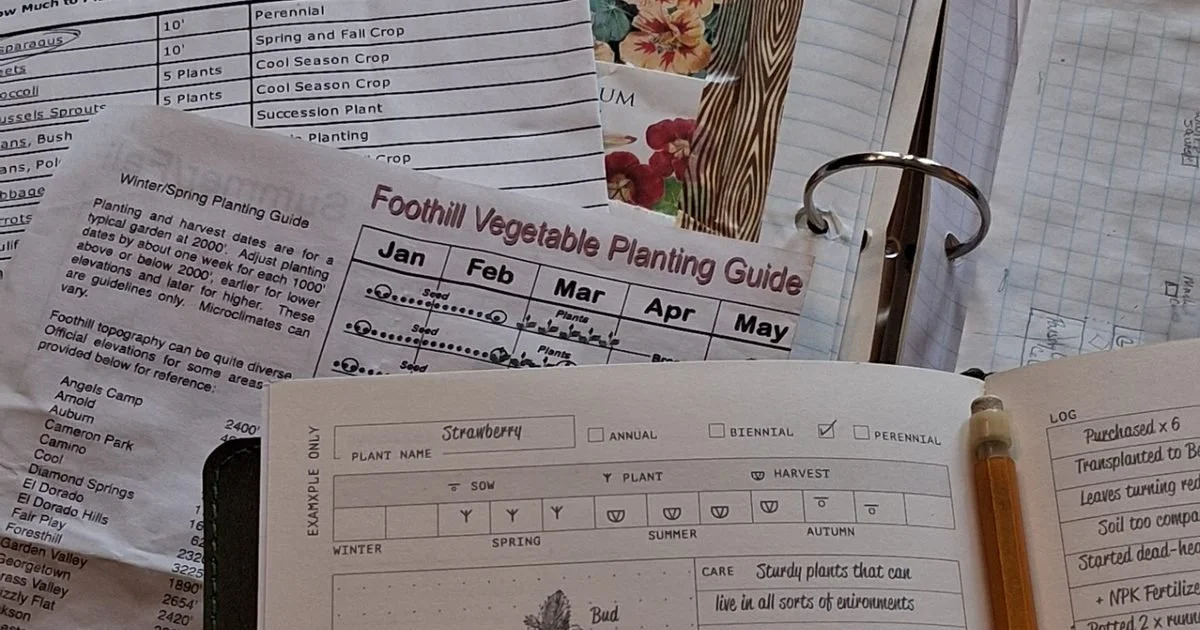
Plants are still standing, the beds still tell their story, and the details are fresh. Grab a notebook or the notes app on a phone, carry a warm drink out to the garden, and walk bed by bed. For each bed, write three lines.
What worked. Keep it, and note the variety.
What flopped, with a one-line guess at why. Heat, water, shade, pests, or planted too late.
One change for 2027. Only one.
The one-change rule matters most. Changing five things at once means never learning which change fixed the problem. One change per bed, then watch what happens.
Two small additions make the notes far more useful. First, take a photo of each bed as it stands today. Spacing, shade lines and bare patches show up in a picture long after memory has smoothed them over. Second, jot down the first and last harvest dates for each crop, even roughly. Those two dates say more about a bed than any plant tag.
Here in the Sierra foothills, the same handful of culprits show up year after year. Tomatoes and peppers that stall when summer nights stay warm. Irrigation that quietly failed for a week. A bed that loses its sun once the oaks leaf out. Gophers and deer testing every gap in the fence. A debrief turns each of those from a mystery into a line on a list. Add a line for any bed that needed frost cloth this fall, too, and the night it first got cold. When the beds are ready for cleanup, here is how to put a Nevada County garden to bed for winter.
In my garden this year, I planted at least one bed of tomatoes and leeks a bit too late. That bed needed more water than the earlier planted beds.
Once every bed has its one change, planning for 2027 stops being a blank page and becomes a list of decisions. Tape the list inside the seed box or pin it in the phone, because January is when the seed catalogs arrive and those decisions get made.
Picture that January morning. Catalogs spread across the table, coffee going cold, and a list already waiting that says which beds get tomatoes, which one rests under a cover crop, and which single change gets tried first. That is planning from notes. Calm, quick, and a long way from the March Saturday scramble.
For the whole path in order, from "I want a garden" to "I'm harvesting," the free guide Lettuce Grow Together lays out each step.
If someone to walk the garden with and map out what comes next sounds useful, that is an In-garden Consultation. One visit, a yard, a clear plan. A Winter In-garden Consultation gift certificate covers any date in 2027 at this year's price of $197, for yourself or for the gardener on a gift list. Get the Winter In-garden Consultation gift certificate
Want more Nevada County gardening advice specific to our Sierra Foothills climate? I send one email every Wednesday — seasonal, practical, and built for where we live. → Join the newsletter here
Ellie is a third-generation kitchen gardener, Certified Garden Coach, and Permaculture Design Consultant with 25 years of growing in Western Nevada County. She tends a one-acre homestead in Grass Valley with her two cats, chickens, and honeybees. She can also be found volunteering in her community as a Master Gardener of Nevada County.
Her work is rooted in a simple belief — that every woman who grows her own food carries that knowledge forward into her home, her community, and the next generation.
If you're ready to carry that knowledge forward in your own backyard, she'd love to help you get started.
