

Why Your Tomatoes Failed Last Year — And What to Do Differently This Season
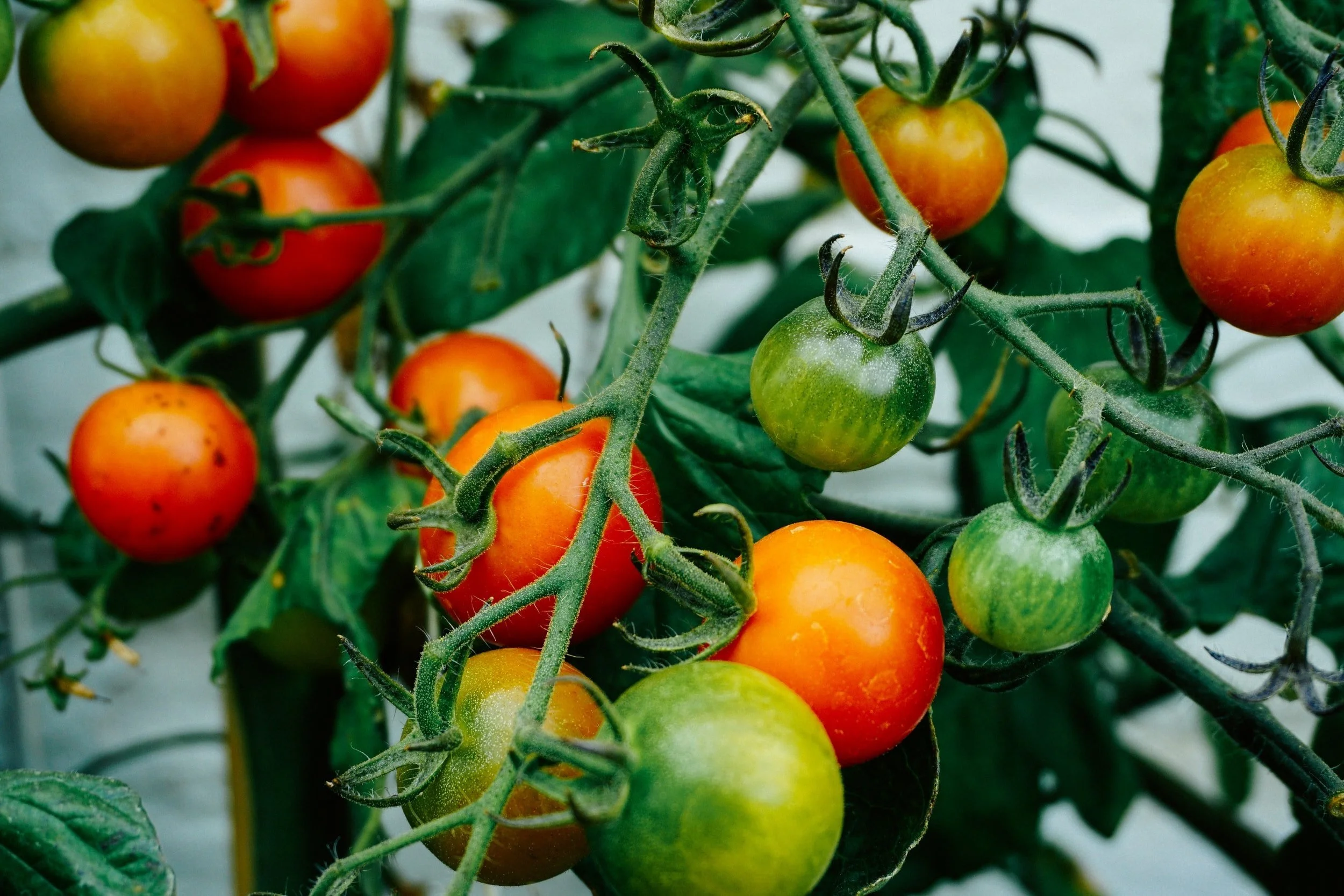
Cherry Tomatoes growing Nevada County
I was out in the garden after first-breakfast this morning — heading out to harvest greens for a second-breakfast omelet — when I felt the dew had soaked through my hem and was chilling my ankles. As I gazed down, the sun breached the shadows and the grass lit up like a diamond necklace.
The beast of wet ankles and the beauty of dew sparkles.
That's April in a Nevada County garden. Everything happening at once — cold mornings, brilliant light, and somewhere in the back of your mind, the question that comes every spring: This is the year the tomatoes work, right?
I hear some version of that from almost every woman I work with. And I hear what comes after it too — the story of last year. The starts bought too early. The plants that sulked all summer. The one or two tomatoes that finally came in October, after the excitement had long gone.
It's not bad luck. It's usually one of three things.
They went in too early.
This is the most common one — and the hardest to resist. The nursery racks fill up in March and everything in you wants to plant. But tomatoes are warm-season crops that need warm nights, and in the Western Sierra foothills our nights aren't reliably warm until early May. A tomato planted in cold soil in March will sit there and sulk, sometimes for weeks, while a tomato planted in warm soil in May will take off and catch up — and then some.
The date that matters isn't when the starts appear at the nursery. It's when your nighttime temperatures stay consistently above 50 degrees. In Nevada County, that's typically the first week of May. Mark your calendar now.
They went in the wrong spot.
Tomatoes want heat. Six to eight hours of direct sun — ideally with afternoon sun, which is the hottest. In the foothills we have microclimates everywhere: a south-facing slope that bakes all day, a bed that gets afternoon shade from a fence or a tree. Knowing your garden's sun map is the difference between a tomato that thrives and one that produces exactly three fruit and calls it a season.
Before you plant anything this spring, spend a day watching where the sun falls — morning, noon, and afternoon. Your tomatoes want the hottest spot you've got.
The soil wasn't ready.
Tomatoes are heavy feeders. They want rich, well-amended soil with good drainage and something to hold moisture through our dry summers. Native Nevada County clay, unamended, will grow a tomato — slowly, reluctantly, and not particularly well. Before your starts go in, work in several inches of quality compost and let it settle for a week if you can. Your tomatoes will notice.
Get these three things right — timing, placement, soil — and you'll be texting someone a photo of your harvest by August.
If you want help figuring out what that looks like for your specific yard — your sun, your beds, your soil — the free Nevada County Planting Guide is a good place to start. → Grab it here
And if you'd like a second set of eyes on your garden before this season gets away from you, I'd love to talk. Book a free Garden Chat here.
Ellie is a third-generation kitchen gardener, Certified Garden Coach, and Permaculture Design Consultant with 25 years of growing in Western Nevada County. She tends a one-acre homestead in Grass Valley with her two cats, chickens, and honeybees. She can also be found volunteering in her community as a Master Gardener of Nevada County.
Her work is rooted in a simple belief — that every woman who grows her own food carries that knowledge forward into her home, her community, and the next generation.
If you're ready to carry that knowledge forward in your own backyard, she'd love to help you get started.
