

Getting Your Garden Ready for Spring in Nevada County
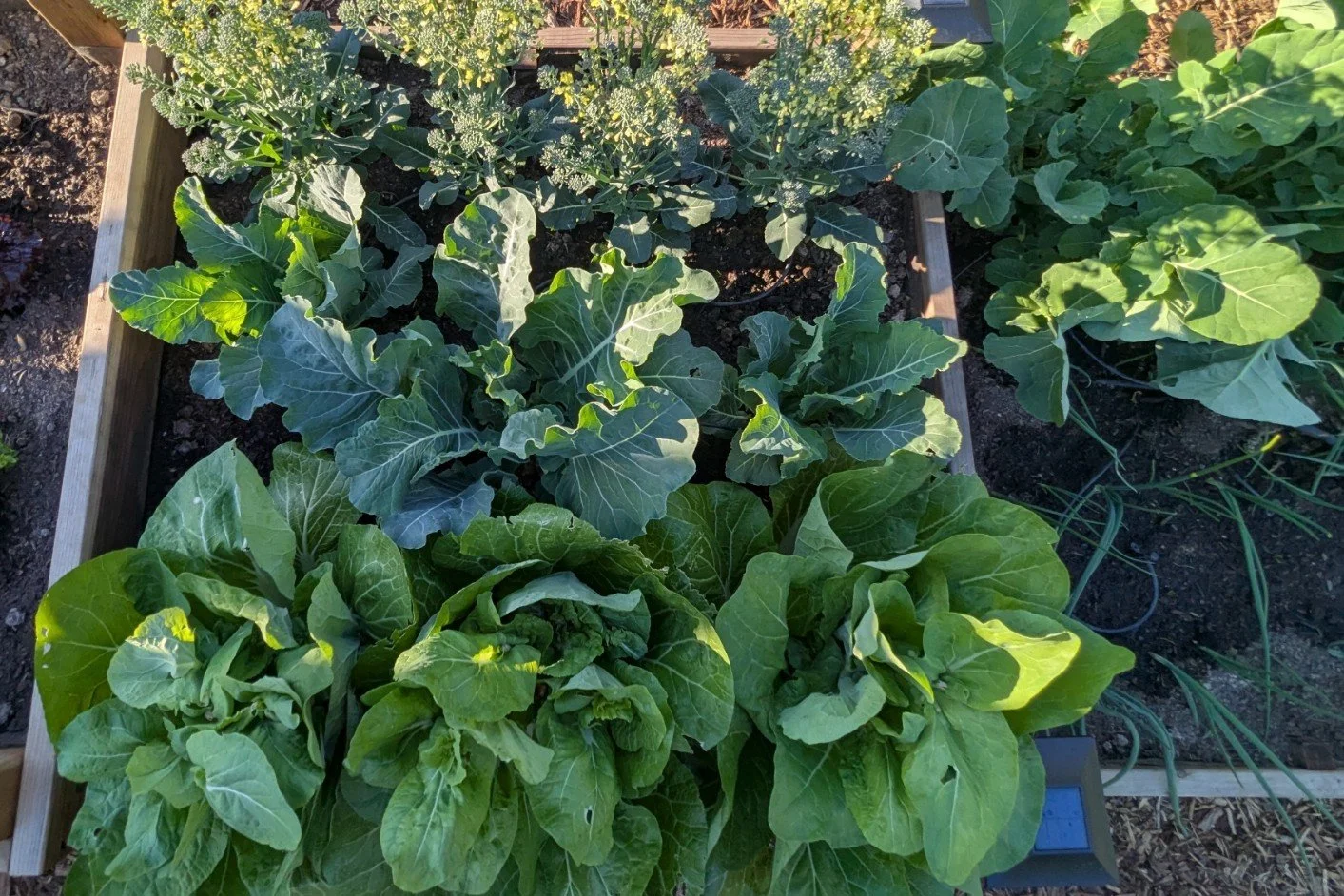
Cool Season Greens and Broccoli grow in Nevada County gardens
Last spring I was standing in Amelia’s backyard in Grass Valley when she gestured at her empty raised beds she inherited from the previous homeowner and said “I have no idea what I’m doing.” It was a beautiful spring day with lots of sunshine. But there was also frustration. And a bit of overwhelm.
If you’re nodding along, you’re in very good company. There’s a certain kind of frustration that only gardeners know — the kind where you’ve done your research, spent real money at the nursery, and still ended up with a sad collection of brown things by July. You tell yourself next year will be different. You pin things on Pinterest. You buy one more bag of amendment. And somehow you find yourself standing in the same spot the following spring, staring at the same beds, wondering what went wrong again. It’s not you. It’s that nobody ever told you the three things that actually make the difference here in Nevada County — and once you know them, the whole thing clicks.
Those three things are set up, timing, and consistency. Get all three right and your garden works. Miss one and you’re back to wondering why your tomatoes are struggling and your lettuce bolted before you got a single salad.
Set up.
Start with a single 4x8 raised bed. Not three beds, not a full kitchen garden — one bed, four feet wide so you can reach the center without stepping in and compacting your soil, eight feet long, filled with quality soil from your local nursery. The size matters because it’s manageable. You can tend it in fifteen minutes, plant it in an afternoon, and when it produces you’ll want more. When people start too big they get overwhelmed and abandon the whole project. When they start with one bed they get hooked.
Timing.
This is where most busy women lose an entire season without realizing it. Our growing window here in the Sierra foothills is specific — not quite Bay Area, not quite mountain — and what you plant in March is completely different from what you plant in May. Right now, in early spring, you want cool-season crops in the ground: lettuce, kale, chard, snap peas, spinach. These are fast, forgiving, and will give you something to harvest before summer heat arrives. Miss this window and you’re waiting until fall for your next chance at cool-season crops. Then in late spring you transition to your warm-season favorites — tomatoes, zucchini, beans — once our nights are reliably warm. Two distinct planting windows, two very different crop lists. Knowing which is which changes everything.
I put together a free Nevada County Planting Guide that maps out both windows month by month so you always know exactly what to plant and when. → Grab it here
Consistency.
A vegetable garden doesn’t need hours of your time — but it does need fifteen minutes several times a week. Water, a quick look for pests, a harvest before things overripen. The women I coach who struggle most are the ones who go all-in on a Saturday and then disappear for two weeks. The ones who thrive treat the garden like a short daily ritual — a few minutes with their coffee, a quick walk-through before work. It fits into a busy life when it becomes a habit rather than a project.
The women I work with in Grass Valley, Penn Valley, and Nevada City are busy professionals. They don’t have time to experiment and fail for another season. When we get these three things dialed in together, the garden stops being a source of guilt and starts being a source of dinner.
That’s the moment I love most in this work — not the planting, but the evening six weeks later when a client texts me a photo of a salad she just picked from her own backyard. Lettuce she grew herself, pesticide-free, still warm from the afternoon sun. She didn’t buy it at BriarPatch or drive to the farmers market. She walked outside in her bare feet and picked it. That moment — small as it sounds — has a way of quietly changing how she sees herself and what she’s capable of.
If you’re ready to figure out exactly what to plant and when here in Nevada County, my free Planting Guide is built specifically for our climate and our season. It takes the guesswork completely off the table.
→ Grab your free Nevada County Planting Guide here
And if you'd like a second set of eyes on your specific yard — the sun, the space, the soil — book a free Garden Chat and we'll talk through exactly what's possible for you this season. → Book your free Garden Chat here
About Ellie
Ellie is a third-generation kitchen gardener, Certified Garden Coach, and Permaculture Design Consultant with 25 years of growing in Western Nevada County. She tends a one-acre homestead in Grass Valley with her two cats, chickens, and honeybees. She can also be found volunteering in her community as a Master Gardener of Nevada County.
Her work is rooted in a simple belief — that every woman who grows her own food carries that knowledge forward into her home, her community, and the next generation.
If you’d like to carry that knowledge forward start with her → free Nevada County Planting Guide or book a free call to talk about your garden.
